A family diary shows how private records become public history at Anacostia
The Plummer diary connects a 2026 exhibition to generations of family preservation and the painstaking work needed to make a fragile record readable.
- Event / announcement date
- 2026-04-23
- Earliest linked source date
- 2011-02-24
- NewsTumble first published
- 2026-10-26T03:29:20Z
- NewsTumble updated
- 2026-10-26T03:29:20Z
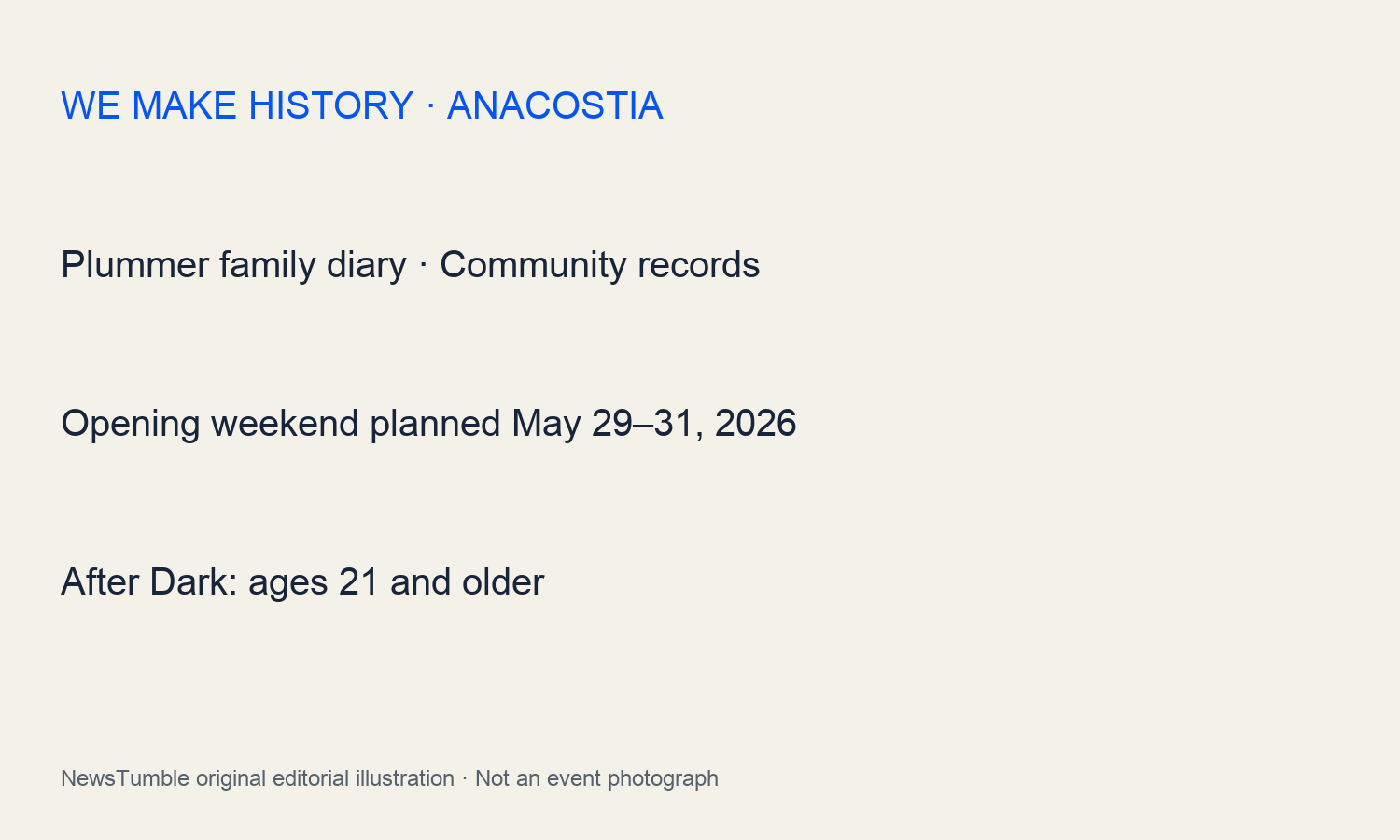
When the Anacostia Community Museum announced We Make History on April 23, 2026, it placed a family diary at the center of a wider question: who keeps the evidence from which history is written? Adam Francis Plummer began the record while enslaved in Maryland in 1841, and his daughter Nellie Arnold Plummer continued it after his death. The show’s May 30 opening followed a much longer effort to preserve and understand the manuscript. [1]
That history was documented by Smithsonian conservator Nora Lockshin in 2011. She wrote that Lucille Betty Tomkins-Davis had carefully wrapped and kept the manuscript even though its context had been lost. A copy of Nellie’s self-published 1927 family history helped reconnect Tomkins-Davis with a cousin, Reverend L. Jerome Fowler, whose genealogy work contributed to locating the diary. Family records were helping explain other family records. [2]
Preservation required interpretation as well as physical care. Lockshin described heavy wear, uncertain page order, multiple writers and inserted material that had become separated or shuffled. Comparing the manuscript with Nellie’s book and a later scholarly edition helped identify pages and details for further checking. The diary’s usefulness as historical evidence depended on that work; its existence alone did not make every passage easy to read or place in context. [2]
The 2026 exhibition broadens that process beyond one family. Its announced objects included Marian Anderson’s coat, Chuck Brown’s guitar, photographs of everyday Washington life and a Washington Spirit player’s jersey. Interactive stations asked visitors to reflect on records they might preserve themselves. The connection is concrete: choices about letters, photographs and personal objects shape what later generations can examine. Encouraging those choices is the museum’s stated aim, rather than a measured result of the exhibition. [1]
As checked on October 25, the Smithsonian’s current listing places We Make History on view from May 30, 2026 through January 2, 2028 and lists daily hours of 10 a.m. to 5 p.m. The May opening-weekend programs are past events. These listings establish the museum’s published schedule; this report does not assess visitor responses or how the exhibition has changed local preservation habits. [1] [3]
The source
- Smithsonian Institution: Anacostia Community Museum To Open “We Make History” ↗
Source published 2026-04-23 · reviewed October 25, 2026 - Smithsonian Institution Archives: A Sense of Place ↗
Source published 2011-02-24 · reviewed October 25, 2026 - Smithsonian Institution: We Make History: current exhibition listing ↗
Undated reference · reviewed October 25, 2026 · No publication date is given on this undated exhibition listing. The dates of the exhibition are not treated as the page’s publication date.
About this item: Retrospective report. No first-hand reporting or independent testing is claimed. Corrections policy.