Clothing recovery needs a fiber check
A trial targeted sorting, not household access.
- Event / announcement date
- 2026-07-09
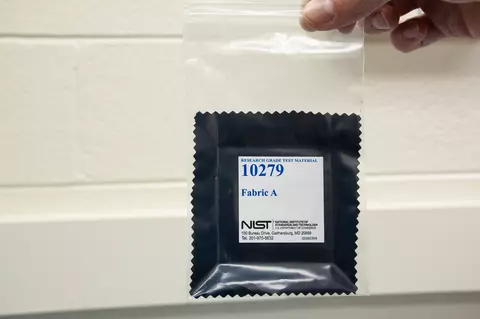
NIST’s July 9, 2026 account introduced five fabric samples for laboratories to compare fiber-identification measurements. The problem lies downstream of donation: inconsistent sorting can keep recoverable clothing from becoming manufacturing feedstock. [1]
An earlier NIST database supplied spectra for 64 fabric types, including blends and thrift-store samples. Near-infrared scanners compare light patterns, but similar fibers and incomplete labels complicate classification. The database gives scanner makers reference data for training and testing algorithms; it does not itself sort donated clothing. [2]
The trial’s July 30 request deadline and September 30 finish have passed. Its announcement did not establish nationwide drop-off access or completed recycling gains; validation was the next step. [1]
The source
- NIST: Textile sorting test material ↗
Source date 2026-07-09 · reviewed October 30, 2026 · Released July 9, updated July 14, 2026; expired study dates retained as historical. - NIST: Earlier textile sorting database ↗
Source date 2025-01-07 · reviewed October 30, 2026 · Released January 7, updated February 4, 2025; earlier context, not a new event.
About this item: Retrospective report. No first-hand reporting or independent testing is claimed. Corrections policy.