The golden orb identification shows why a deep-sea photograph was not enough
Retrospective: NOAA’s April 2026 finding linked the recovered object to an anemone’s base. Physical specimens and genetic comparison supplied the missing evidence.
- Event / announcement date
- 2026-04-22
- Earliest linked source date
- 2026-04-22
- NewsTumble first published
- 2026-10-26T18:34:29Z
- NewsTumble updated
- 2026-10-26T18:34:29Z
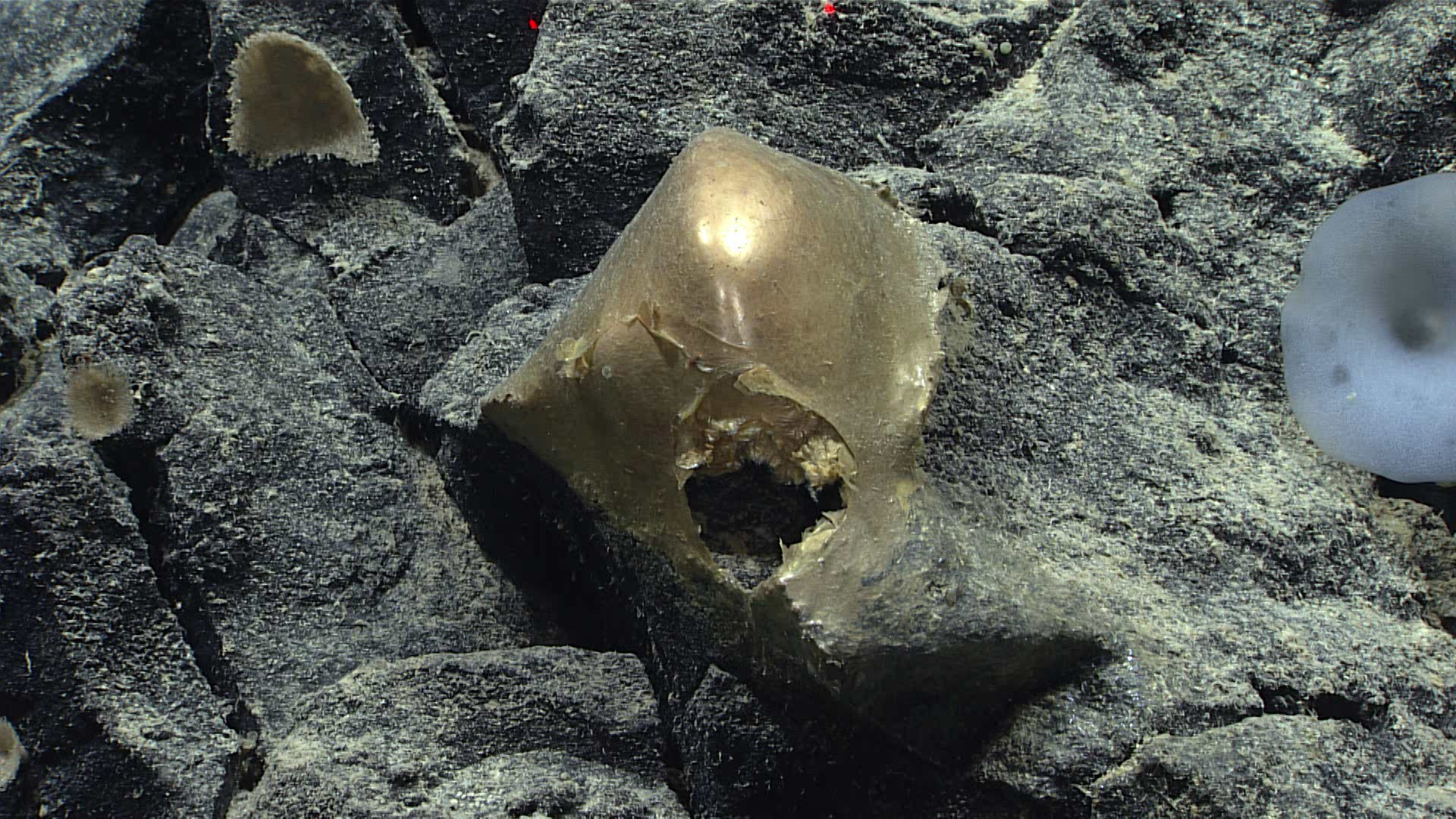
NOAA announced on April 22, 2026 that the golden object recovered from the Gulf of Alaska in 2023 was a remnant of a giant deep-sea anemone's attachment base. The identification concerned an unusual piece of an already-known animal, Relicanthus daphneae, rather than the discovery of a new species. [1]
The delay illustrates a limit of exploration by camera. Smithsonian Ocean's account dates the encounter to August 30, 2023; the remotely operated vehicle recovered the specimen, but its appearance did not identify it. Bringing it into a museum collection allowed specialists to examine tissue and DNA that the dive imagery alone could not resolve. [2]
NOAA described a layered, fibrous material with specialized cells called spirocysts, narrowing the possibilities to a group of corals and anemones. Initial DNA barcoding was inconclusive, likely because microscopic life on the sample contributed DNA. Broader sequencing and comparison of mitochondrial genomes from this and a second specimen produced a near match to a Relicanthus reference. [1]
In his April account, coauthor Steven Auscavitch described the research as a preprint submitted to PeerJ for review. He said imagery and physical specimens from several ocean basins helped build the case. The identification should be read in that stated publication context; this retrospective does not establish a later peer-reviewed outcome. The underlying preprint's full text was not accessible during this review. [3]
NOAA left the animal's fate unresolved: it may have died or moved away. Identification of the remnant does not establish which happened. [1]
For scientists trying to identify other unfamiliar finds, the retained object is the useful result. Auscavitch emphasized that the recovered voucher specimen made the analysis possible, and the museum account describes how physical examination narrowed the search before genetic comparison. Preserving a sample leaves material for later questions, rather than relying solely on a striking photograph. [2] [3]
The source
- NOAA: Golden orb identification and laboratory methods ↗
Source published 2026-04-22 · reviewed October 26, 2026 - Smithsonian Ocean: Museum examination of the golden orb ↗
Undated reference · reviewed October 26, 2026 · No publication date with an exact day is given on this context page; it is labeled April 2026. No day is invented. - Steven R. Auscavitch, study coauthor: Coauthor account and preprint status ↗
Source published 2026-04-22 · reviewed October 26, 2026
About this item: Retrospective report. No first-hand reporting or independent testing is claimed. Corrections policy.