Knots sharpen a supernova mystery
Better images test an earlier hypothesis.
- Event / announcement date
- 2026-10-06
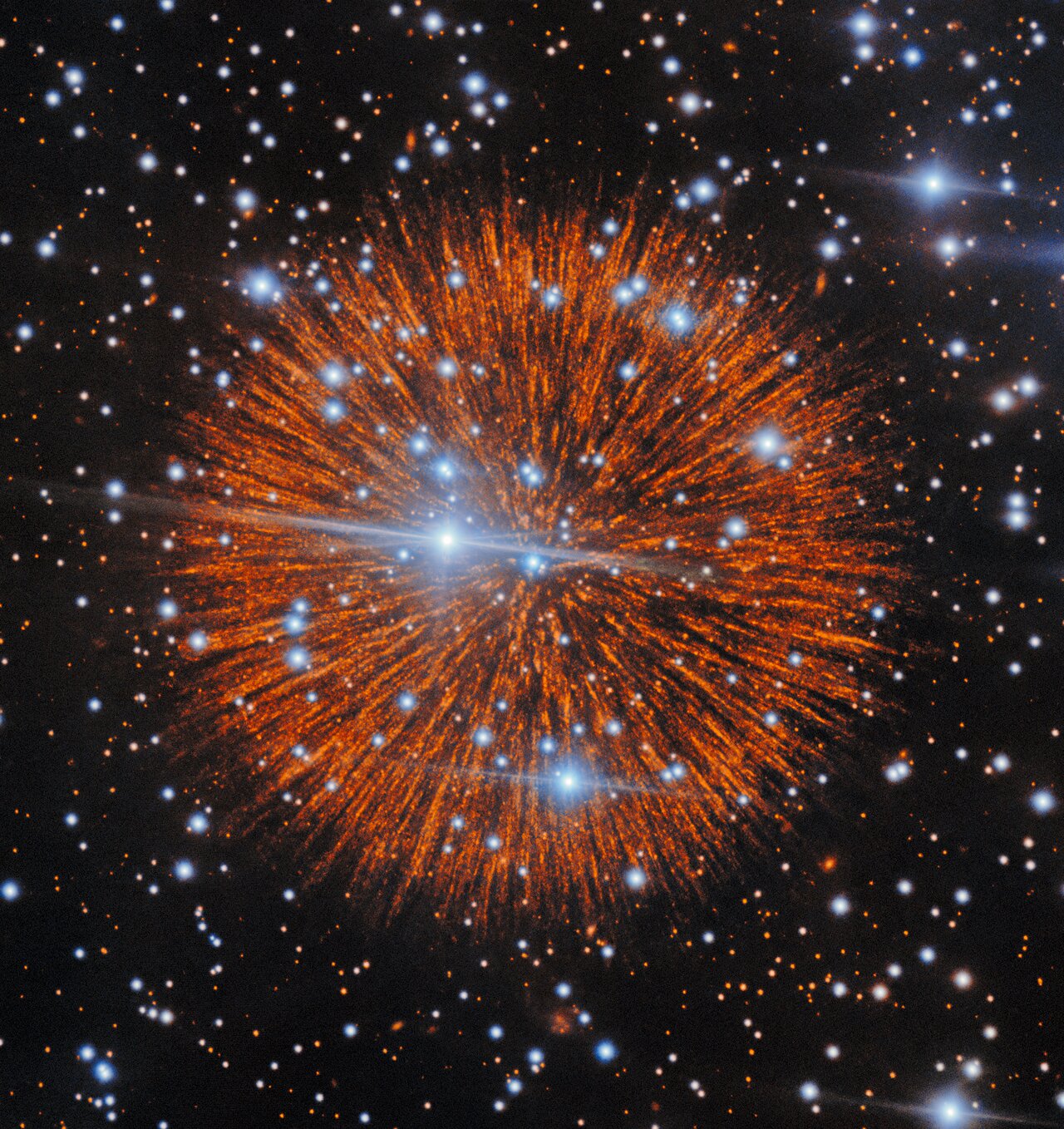
Gemini North observations revealed chains of gas knots in Pa 30’s radial filaments, NOIRLab reported October 6. The structure suggests uneven temperature or density around the exploding star helped shape its ejecta; the cause remains uncertain. [1]
A 2023 study used sulfur-line images and spectra to identify the unusual filaments. Its authors suggested interaction with the central star’s wind, but limited resolution left knot sizes and the filaments’ convergence point unresolved. They specifically sought deeper, sharper images to distinguish those possibilities. The new observations address that earlier measurement gap. [2]
Pa 30 remains the likely counterpart of the supernova recorded in 1181. Its central star’s near-central position argues against a large explosion kick, narrowing models of the incomplete blast. [1]
The source
- NOIRLab: Pa 30 knots ↗
Source date 2026-10-06 · reviewed October 29, 2026 · Original October 6 release. - Fesen et al.: Earlier filament study ↗
Source date 2023-02-16 · reviewed October 29, 2026 · 2023 revised manuscript.
About this item: Retrospective report. No first-hand reporting or independent testing is claimed. Corrections policy.