A stellar fossil’s chemical limits
Gravity shapes the surviving evidence.
- Event / announcement date
- 2026-03-16
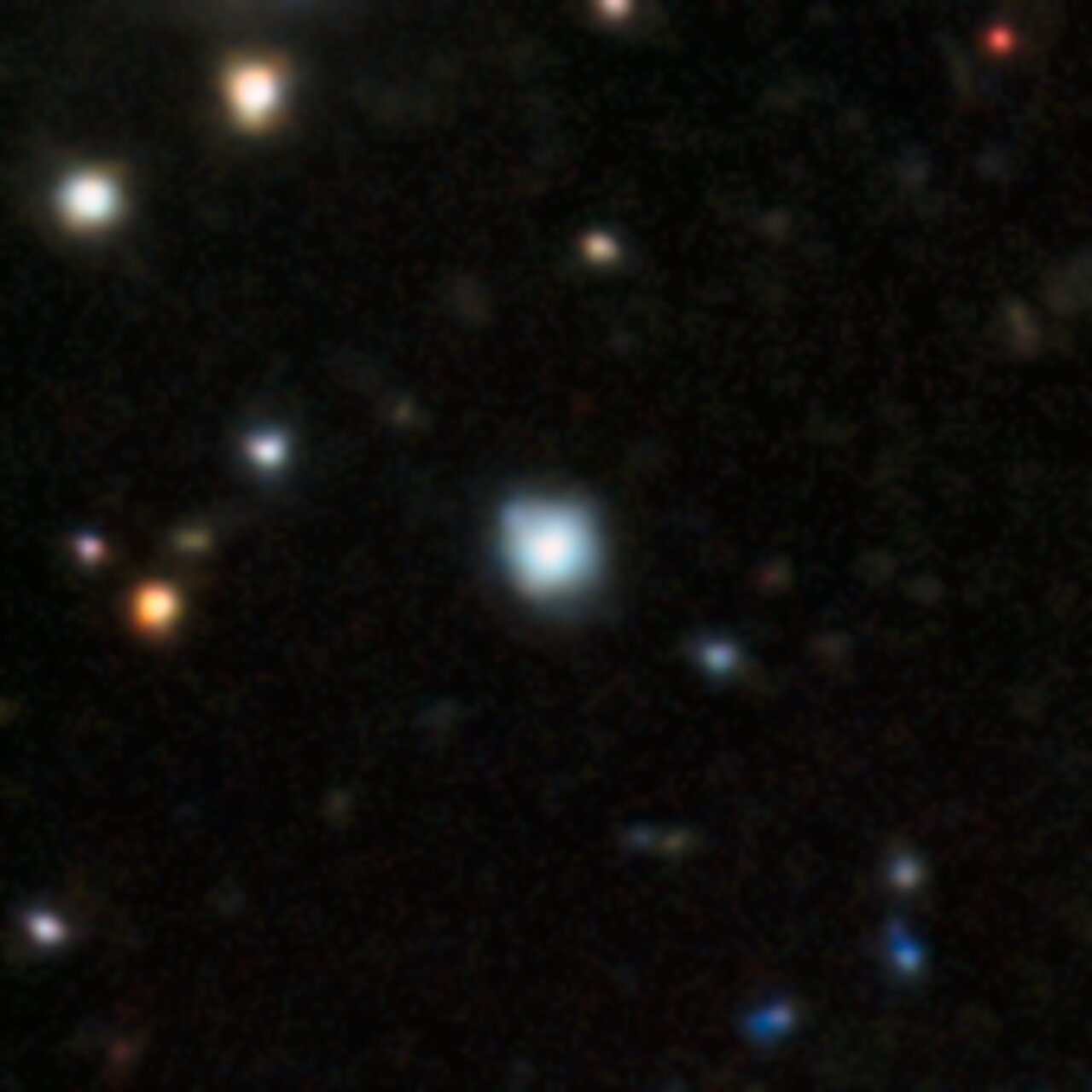
The March 16 study constrained PicII-503’s iron/hydrogen ratio below 1/43,000 solar, with carbon/iron enhancement. These chemical traces reflect earlier enrichment, not direct observations of the first stars. [1] [2]
An earlier Pictor II survey identified 13 member stars using spectroscopy. Their motions, size and mass-to-light ratio supported a dark-matter-dominated galaxy, rather than a star cluster. That environmental classification matters: a small galaxy’s shallow gravity constrains which supernova debris it could retain. The dynamical result depended particularly on two stars’ velocities. [3]
Calcium-sensitive imaging selected the target for deeper spectroscopy. A low-energy supernova fits the chemistry; inferred progenitor properties depend on modelling assumptions. [2]
The source
- NOIRLab: Pictor II findings ↗
Source date 2026-03-16 · reviewed October 30, 2026 · Dated institutional account. - Chiti et al.: Stellar chemistry study ↗
Source date 2025-08-06 · reviewed October 30, 2026 · Author manuscript; revised March 16, 2026. - Pace et al.: Earlier Pictor survey ↗
Source date 2025-06-27 · reviewed October 30, 2026 · Revised August 4, 2025.
About this item: Retrospective report. No first-hand reporting or independent testing is claimed. Corrections policy.