Deep-sea fish need live observations
Video preserves behavior specimens miss.
- Event / announcement date
- 2026-03-19
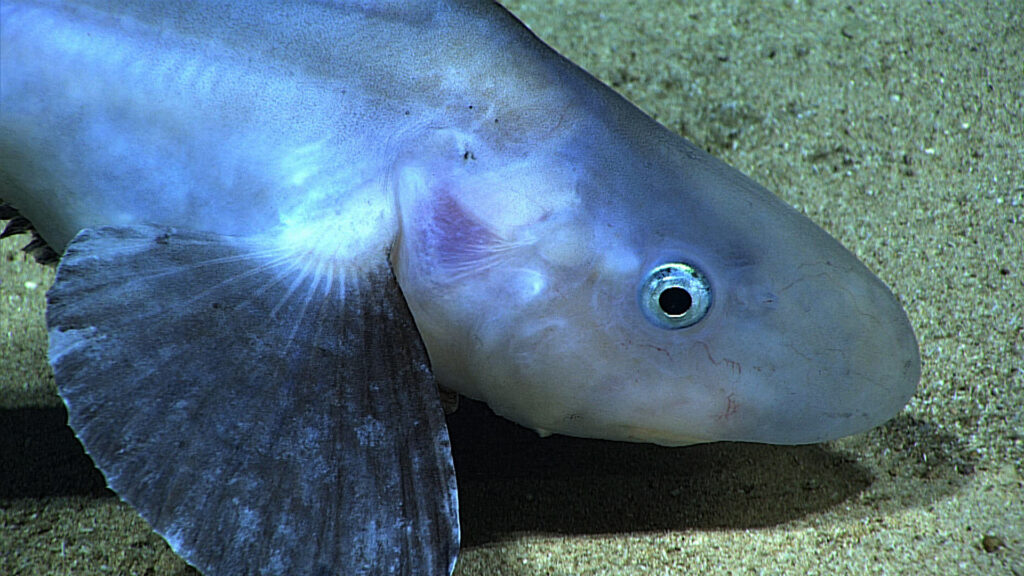
NOAA’s March 19 account of a Puerto Rico fish study described footage from 30 dives, spanning 250–6,300 meters. Fish abundance and diversity fell with depth; actively swimming fish in deeper, colder water tended toward elongated, eel-like bodies. [1]
The fieldwork has a technological history. A 2022 Puerto Rico expedition made seven Global Explorer vehicle dives and tested a low-light camera to study animals less intrusively. Its depth range, 210–1,246 meters, was narrower than the later study’s combined footage. [2]
NOAA suggested endurance swimming and extra water-motion sensors as explanations for long bodies; the cause remains unresolved. Video also caught supposedly open-water fish interacting with the seabed—behavior a collected specimen cannot preserve. [1]
The source
- NOAA: Fish depth observations ↗
Source date 2026-03-19 · reviewed October 29, 2026 · publication - NOAA: Puerto Rico expedition context ↗
Source date 2022-03-31 · reviewed October 29, 2026 · The actual source footer states Published March31,2022; expedition dates April6–19,2022 are separate.
About this item: Retrospective report. No first-hand reporting or independent testing is claimed. Corrections policy.