Manganese can replace seabed sediment
Chemistry helps distinguish a formation route.
- Event / announcement date
- 2026-10-01
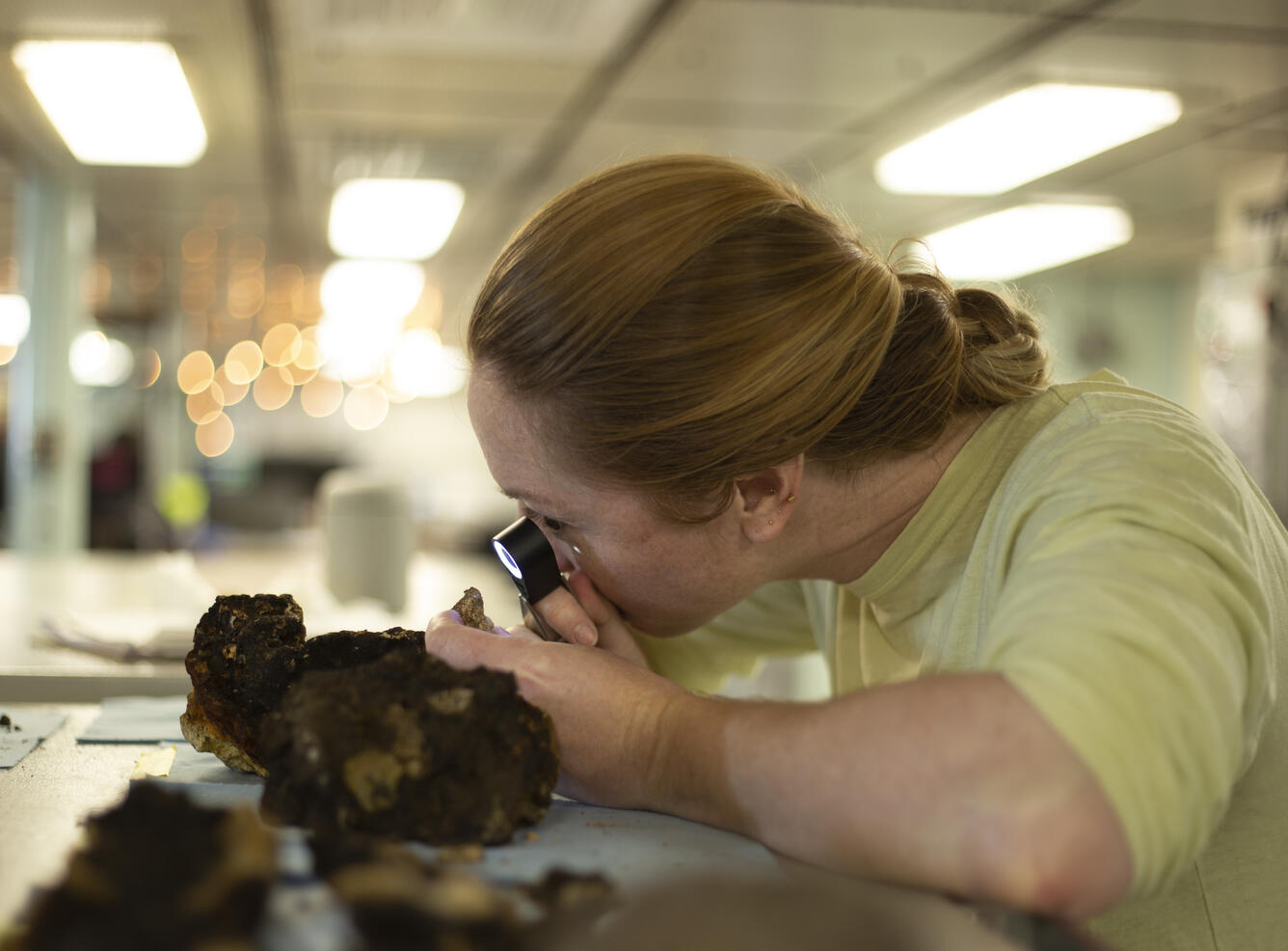
USGS’s October 1 account describes manganese minerals replacing carbonate sediment beneath the seabed near American Samoa. Among 24 dredged samples from three sites, 18 strongly altered samples averaged 51% manganese by weight. Elevated lithium and low iron help distinguish a warm-fluid origin from slow precipitation out of cold seawater. Preserved textures suggest repeated mineralizing pulses. Finding that pathway at three sites raises a distribution question; it does not establish a global deposit inventory. [1]
The agency’s separate seabed-minerals reference explains the contrast. Ordinary ferromanganese crusts accumulate on exposed rock over millions of years, whereas nodules grow around a nucleus on sediment. Hydrothermal fluids instead circulate through crustal rocks, acquire dissolved material and precipitate minerals as they cool. Similar metal names therefore need not imply the same geology or formation history. [2]
Formation is also separate from the effects of disturbance. A 2024 USGS account describes laboratory incubations of Pacific manganese nodules under oxygen-deficient conditions: dissolved copper increased, suggesting a possible hazard from mining waste plumes. Those experiments concern another material and setting. They identify an environmental question to investigate, rather than demonstrating damage from mining the Samoan occurrences. [3]
The source
- USGS: Samoan mineral replacement ↗
Source date 2026-10-01 · reviewed October 29, 2026 - USGS: Seabed mineral processes ↗
Source date 2022-06-15 · reviewed October 29, 2026 - USGS: Nodule waste-plume experiments ↗
Source date 2024-07-05 · reviewed October 29, 2026
About this item: Retrospective report. No first-hand reporting or independent testing is claimed. Corrections policy.