Webb researchers identified nine compact galaxies that resisted easy classification
Retrospective: January findings paired unusual images with a need for better spectra.
- Event / announcement date
- 2026-01-06
- Earliest linked source date
- 2026-01-06
- NewsTumble first published
- 2026-10-25T23:31:46Z
- NewsTumble updated
- 2026-10-25T23:31:46Z
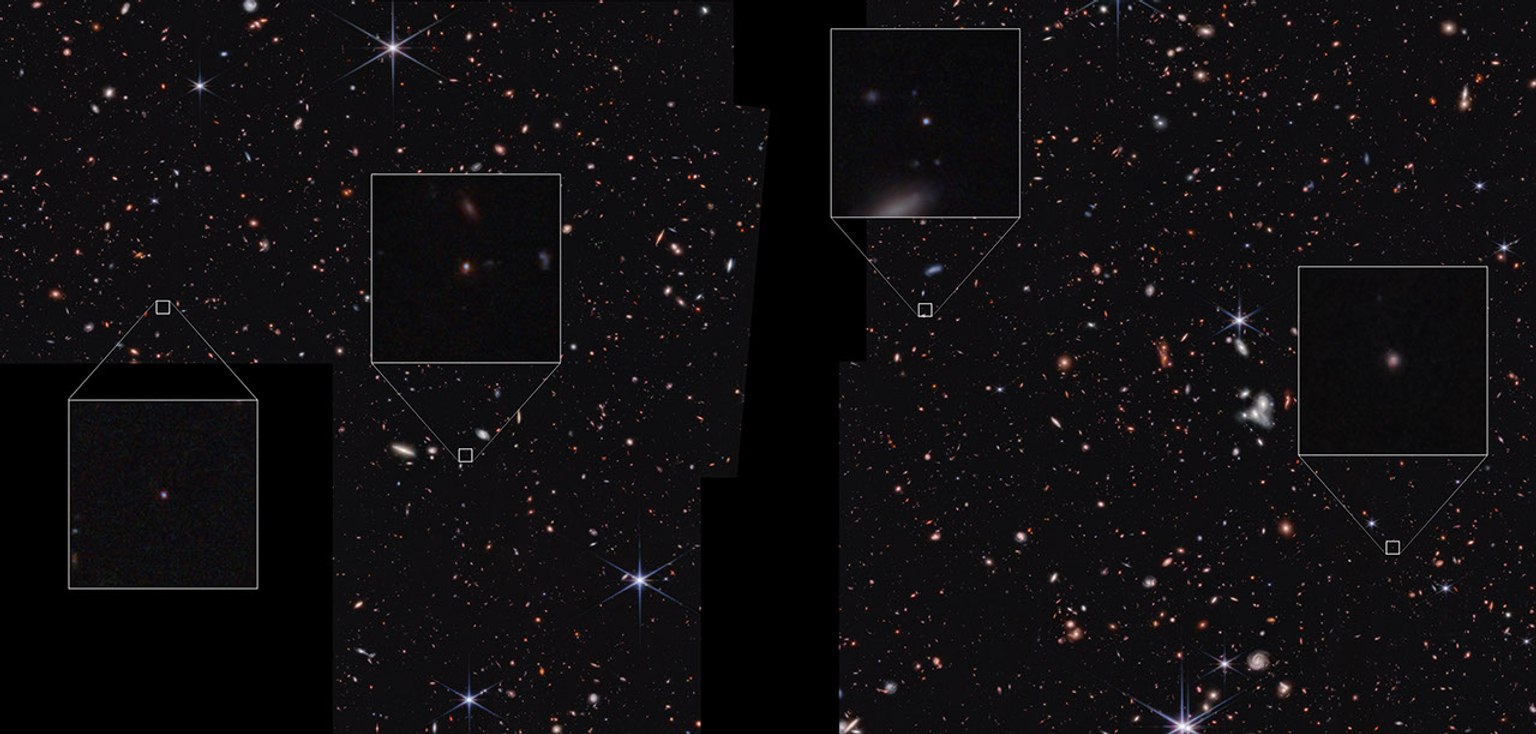
NASA’s January 6, 2026 account described nine distant objects with an unusual mix of properties: they appeared nearly point-like in Webb images, but their spectra did not match typical quasars. University of Missouri researchers identified the sample while examining archived telescope surveys and presented the work at an American Astronomical Society meeting. [1]
The team reduced an initial pool of about 2,000 sources to nine objects seen as they existed 12 billion to 12.6 billion years ago. The narrow peaks in their emission spectra suggested slower gas movement than the broad peaks associated with many quasars. Their compact appearance also distinguished them from the nearer galaxies whose spectra they resembled. [1]
The explanation remained unsettled. The researchers said their low-resolution spectra could be consistent with star formation, and proposed that Webb might be seeing an early stage of galaxy growth. They called for a larger sample and higher-resolution spectra before drawing firmer conclusions. [1]
The source
- NASA: Scientists Identify Astronomy’s Platypus with NASA’s Webb Telescope ↗
Source published 2026-01-06 · reviewed October 25, 2026
About this item: Retrospective source brief. No first-hand reporting or independent testing is claimed. Corrections policy.