Webb observations linked a young star’s hot disk with crystals farther out
Retrospective: January’s EC 53 study traced minerals and outflows during two activity states.
- Event / announcement date
- 2026-01-21
- Earliest linked source date
- 2026-01-21
- NewsTumble first published
- 2026-10-25T23:31:46Z
- NewsTumble updated
- 2026-10-25T23:31:46Z
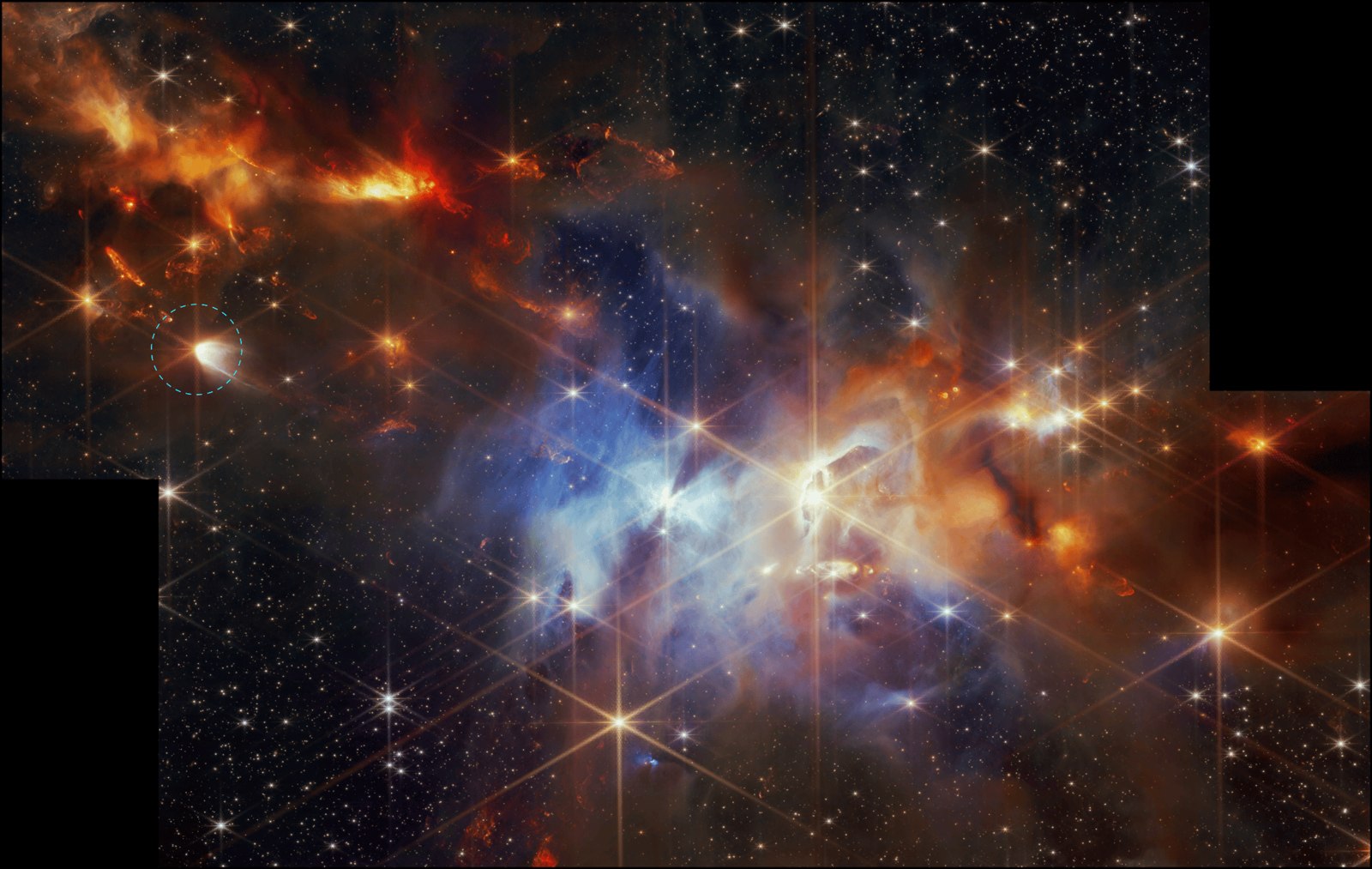
In a January 21, 2026 report, NASA described Webb observations showing crystalline silicates forming in the hot inner disk around the young star EC 53. The researchers also detected outflows capable of moving material toward the disk’s colder outer regions, offering an explanation for how heat-formed minerals can reach places where comets may develop. [1]
The team used Webb’s Mid-Infrared Instrument to compare detailed spectra from quieter and more active phases of the star. Those measurements identified silicate minerals and mapped their locations. NASA said EC 53 has bursts lasting about 100 days roughly every 18 months, when it takes in surrounding material more rapidly and ejects jets and outflows. [1]
EC 53 lies in the Serpens Nebula, about 1,300 light-years away. The study concerned a system still forming; the possible transport of crystals to comet-forming regions was not evidence that finished planets or comets had already been observed there. [1]
The source
- NASA: NASA Webb Finds Young Sun-Like Star Forging, Spewing Common Crystals ↗
Source published 2026-01-21 · reviewed October 25, 2026 - NASA: NASA’s James Webb Space Telescope Finds Crystal-Spewing Protostar ↗
Source published 2026-01-27 · reviewed October 25, 2026
About this item: Retrospective source brief. No first-hand reporting or independent testing is claimed. Corrections policy.